
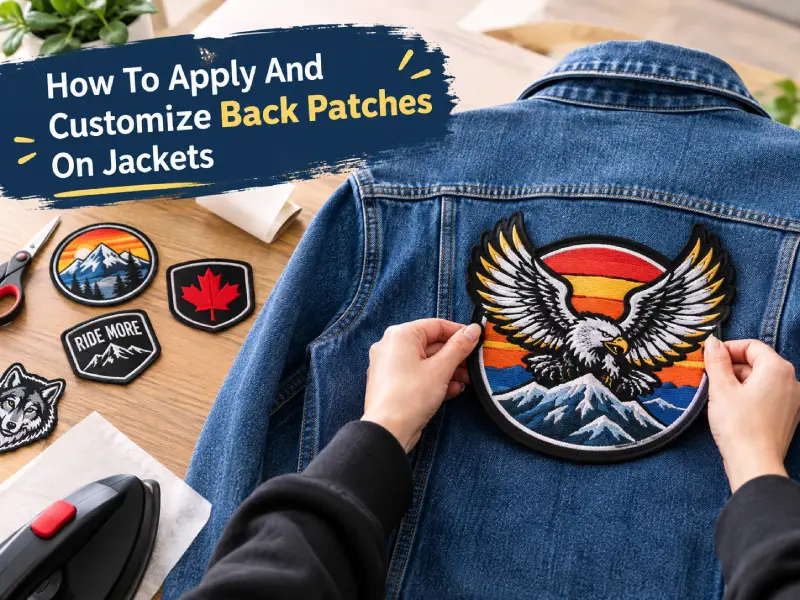
How To Apply And Customize Back Patches On Jackets
Personalize your basic jacket by using custom back patches on it. Learn about the ways you can apply them, designs that will suit them, where you can place them, and other useful techniques to make them perfect.
Turn A Plain Jacket Into A Personal Statement
It is not necessary for a jacket to be covered with numerous patches to look different and attractive. Quite often, it takes only one specially designed back patch to radically transform its visual appeal. The back area provides sufficient space for a patch design to perform at its best.
However, achieving success with a patch requires much more than finding a nice picture and placing it on a fabric surface. It requires proper consideration of the artwork, patch dimensions, materials, colors, positioning, and fixing of patches.
The improper location of a patch may spoil even the best-looking jacket, whereas a properly positioned patch will turn it into a professional product.
Whether you want to add a personal touch to your old jacket or design a branded clothing line, knowing the main points will help you achieve the best results.
Choose A Design That Gives The Jacket Character
The artwork should be finalized before the manufacture of the patch. A good design would generally have one dominant feature in contrast to having too many elements fighting for dominance.
The artwork should also match the jacket itself. A design that is bold would work best for large jackets, whereas a simple one is suitable for small jackets.
It is essential that the artwork is legible for custom manufacturing. Fine detailing, thin outlines, and small text may have to be modified so that they are readable.
Pick The Right Size For A Balanced Look
It is essential that the patch fits in the available space on the back without overlapping seams, pockets, or any other critical areas of the jacket. While a big patch may give a bold effect, there is still a need for it to have some spacing. Small jackets may require a more compact approach.
When purchasing custom patches Canada, one should think about the jacket size, material, and style before determining the size of the patch. Taking the measurements of the back first will help prevent difficulties later on and make the process much easier.
Select An Application Method That Keeps It Secure
There are a number of options available for attaching back patches, which include sewing, iron-on application, adhesive backing, and even a hook-and-loop option.
Sewing is often a good option for frequent use on jackets. The iron-on option is easier to use, but it needs a proper type of fabric and appropriate heat.
The technique used must always correspond with the type of jacket. Fabric that reacts to heat might not be compatible with an iron-on application technique. It is always a good idea to check the backing of the patch before ordering.
Position The Patch For A Clean Finished Look
Placement can make a huge difference. Before attaching the patch, it needs to be positioned and inspected from various angles.
Typically, the middle of the back is the most convenient location for an elaborate design. It is advisable to use measurements from the collar or shoulder seams for accurate placement.
Try on the jacket before the final placement of the patch. This will show whether the patch is located too high, too low, or off-center. Spending a few minutes on placement inspection can save the trouble of removing the patch later.
Customize The Details Without Making It Look Messy
Customization makes the patch fit the particular style, group, brand, or individual.
Design can be modified by using sizes, shapes, colors, lettering, borders, and types of threads. But if there is too much detail in it, then it might be hard to understand what is written on the patch.
People who want to explore various patches must first learn about morale patches to come up with a proper idea for the design of the artwork that needs to convey a meaningful message.
A design that has good typography or only one symbolic image may work out much better than those with too many elements.
Make The Patch Stand Out With The Right Texture
Texture gives a back patch added visual appeal compared to flat designs. Embroidered patches have raised threadwork, whereas woven patches have a smooth texture ideal for smaller artworks and typography. Leather patches may also be considered because of their unique texture that has a simple, plain look.
The decision must be made with respect to the type of jacket and what look the wearer would like to achieve. Special effects like metallic thread work and textured stitch work may be considered to add emphasis to some parts of the design.
Choose Materials That Suit The Jacket
The material of the patch has an influence on the appearance as well as its durability. Embroidered patches provide texture and vibrant color; on the other hand, woven patches have a smooth surface and allow for creating intricate details.
The leather patch is suitable for creating a simple and robust design for the jacket. The printed patch is great to use when creating multi-colored artwork.
Also, the material of the jacket needs to be considered. Heavy denim or canvas jackets allow using different kinds of patches in contrast to light or fragile fabrics.
Add Supporting Details For A More Complete Style
A large back patch may stand alone, but small details can also be added in other parts of the jacket.
The front, sleeves, or pockets can be adorned with small patches or labels to complement the overall design. These should have an identical color scheme or style as that of the jacket so that it looks well-balanced.
Several companies use woven labels for branding to have a more streamlined image of the brand identity. The focus remains on the main back patch label. Additional details may be included for interest but not to overcrowd the jacket.
Secure The Patch Without Damaging The Fabric
Application must be done carefully. When applying a sew-on patch, you need to position the patch first and sew around the edges afterward.
For iron-ons, follow the recommended heat for the patch from the manufacturer. Use a pressing cloth to give additional protection to the patch when using the iron.
However, there are some types of fabric that cannot be exposed to heat. This will make sewing a better choice of attachment. It will ensure that the patch is firmly attached.
Protect The Patch For A Longer-Lasting Finish
Proper maintenance allows the patch to remain in its attractive condition for a longer period of time. The method of cleaning varies depending on the materials used in the patch and in the jacket.
Aggressive washing may cause threads to come apart or may cause damage to the decorations. Gentle cleaning is preferred in most cases.
Reversing the jacket before washing will ensure added safety if the fabric is washable by machine. Proper maintenance will avoid problems such as fading, loose stitches, and damage to the patch.
Create A Jacket That Reflects Personal Style
Customization allows wearers to turn an ordinary jacket into something that feels personal and distinctive. Rather than choosing a ready-made design, they can create a patch around their interests, symbols, artwork, or a message they want to express. The design can be bold and eye-catching or simple and traditional, depending on the desired style.
The right size and positioning help the design look balanced and polished on the jacket. A well-planned patch can also give an old jacket a fresh appearance without changing the garment. This personalized approach can extend to other clothing, such as custom hats Canada, helping create a consistent style across an entire outfit.
Common Questions About Jacket Patch Customization
Can a big patch be put on all jackets?
No, not all jackets are meant to have a large back patch. It is important to consider the material, space, and construction of the jacket first. The heavy materials offer good stability, but lighter materials might need smaller patches.
Is it better to sew or iron a back patch?
It is better to sew the patches on jackets, especially those that get worn regularly, as the thread provides lasting stability. Iron-on patches might be quick, but it is necessary to have the proper fabric for ironing to keep the patches on.
How should the back patch be attached?
The patches should be put at the center back of the jacket. Measuring from the collar and shoulder seam of the jacket could help keep the patch straight. Wearing the jacket before making a decision about patch placement is recommended.
Can multiple patches be used on one jacket?
Yes, multiple patches can be used when the overall effect is well balanced. The back patch can still serve as the main patch, but other patches may also be added to the front or sleeves without cluttering up the jacket.
How can the back patch last longer?
The proper method of attaching the patch and taking good care of it will help preserve it for a longer time. It should be washed gently and not exposed to high temperatures.
Conclusion
A back patch can transform the appearance of the jacket totally without making any alteration to the jacket. Proper selection of artwork, sizing, positioning, and the correct method of attaching the patch to the jacket will produce the most desired results. The custom features will make it more interesting, but the design should be clear and not overloaded. Proper care will help to preserve stitching, colors, and edges of the patch for a long period. With a little planning, most suitable jackets can be made more unique and individual through customization. The secret is to concentrate on simplicity of design, secure application, and an effect that works naturally with the jacket.

I’m the creative voice behind the blog at Embroidered Patches Canada, where I turn custom patch design into clear, practical insights for brands, teams, and creators. I provide tips on how to design embroidered patches that not only look spectacular but also have a lasting impact, covering everything from materials and stitch styles to advertising strategies and patch trends. I help companies, organisations, and individuals transform their ideas into elite custom patches that tell a story by providing in-depth instructions, trend updates, and professional advice.