
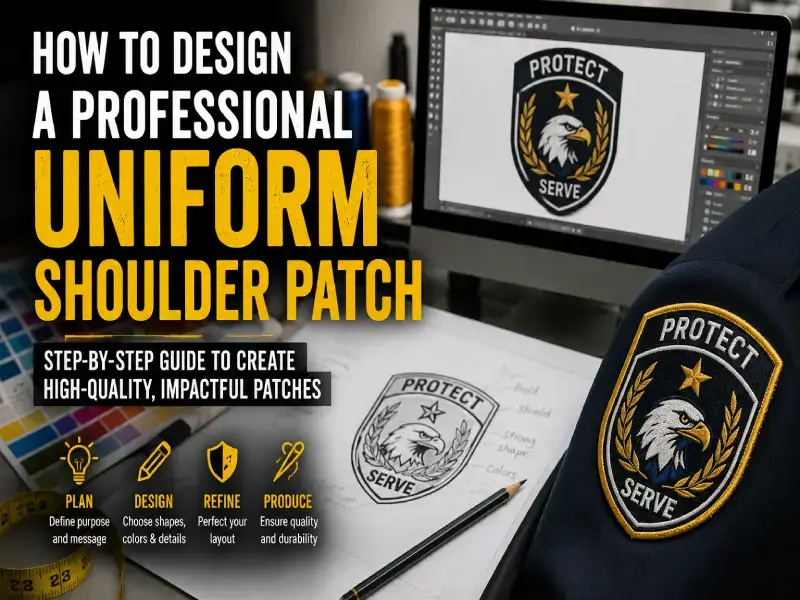
How to Design a Professional Uniform Shoulder Patch
A shoulder patch is usually the first thing noticed on a uniform. Whether it is added to a security shirt, work jacket, club uniform, sports kit, or tactical outfit, the patch says a lot about the group wearing it.
Some patches instantly look clean and professional. Others end up looking crowded, hard to read, or poorly stitched. Most of the time, the problem starts with the design itself.
Good patch design does not need expensive artwork or complicated graphics. A simple layout, readable text, balanced colors, and the right patch style usually give better results than overloaded designs.
How to Design a Uniform Shoulder Patch That Actually Looks Professional?
Many brands and organizations now use embroidery patch custom services because they want uniforms to look more organized and easier to recognize. Even small businesses are now investing in custom-made emblems to create a stronger team image without spending too much money.
If the patch is being designed for the first time, a few small decisions can make a big difference in the final result.
Start with One Clear Idea
A shoulder patch should not try to include everything at once.
Common mistakes that people make while designing personalized uniform patches are:
- Too much text
- Multiple logos
- Extra symbols
- Tiny details
- Long slogans
That usually creates a messy patch once stitching begins.
Most professional patches focus on one main element:
- Alogo
- A department name
- A team symbol
- A short motto
- Initials or rank
When the design stays focused, the patch becomes easier to read and easier to recognize from a distance.
The Patch Size Matters More Than People Think
A design may look perfect on a computer screen, but still fail during production because the size was too small.
For shoulder placement, patches are commonly made between 3 and 5 inches. That size usually gives enough room for text and graphics without making the uniform look bulky.
Smaller patches work best for:
- Simple logos
- Initials
- Clean symbols
Larger patches are better when:
- More lettering is included
- Detailed graphics are used
- Multiple sections are needed
Tiny lettering on a small patch usually disappears once thread stitching starts.
Pick Colors That Stay Easy to Read
Color contrast affects visibility more than design style.
If dark text is placed on another dark background, the patch becomes difficult to read. The same problem happens with very light colors placed together.
Strong contrast normally works best.
Examples:
- White text on black
- Gold on navy
- Black on gray
- Red on white
Most professional patches stay within a limited color palette instead of using too many shades together.
Even though many embroidery patch manufacturers allow several thread colors, too many colors can make the patch look cluttered.
Clean color combinations usually create standout uniform designs easily because the eye focuses on the main details immediately.
Simple Fonts Usually Work Better
Simple Fonts Work Better
Fancy fonts might look good on a screen. They do not work well for embroidery.
Here are some fonts that usually stay readable after embroidery:
- Arial Font
- Helvetica Font
- Verdana Font
- Impact Fon
For shoulder patches, the font letters need to be large enough to read. If the text is too small, it may disappear completely after production.
Too Much Detail Can Ruin the Patch
One common problem in patch design is over-detailing.
Very thin lines, tiny artwork, and crowded graphics often lose quality after embroidery. What looked sharp digitally may appear blurry once stitched onto fabric.
Professional patches normally leave enough open space between elements.
Choosing the Right Patch Style
Not every patch type works for every design.
The patch material should match the artwork and the purpose of the uniform.
Embroidered Patches
These are the most traditional options. Raised stitching creates texture and depth.
Best for:
- uniforms
- security companies
- sports teams
- clubs
- work wear
Woven Patches
Woven styles hold smaller details more clearly.
Best for:
- thin lines
- small text
- detailed logos
PVC Patches
PVC patches are flexible and weather-resistant.
Best for:
- outdoor uniforms
- tactical gear
- heavy-duty use
The cleaner the match between patch style and design, the better the finished patch usually looks.
Shape Changes the Entire Feel of the Patch
The patch shape affects how formal or modern the design looks.
Common shoulder patch shapes include:
- Shield shape
- Rectangle shape
- Oval shape
- Circle shape
- Tombstone shape
- Rocker shape
- Wedge shape
Shield patches are commonly used for security, police, and military uniforms because they look structured and official.
Circular and custom-cut patches are often chosen for clubs, fashion brands, and sports teams.
Simple shapes also make borders cleaner and stitching more durable.
Borders Help the Patch Last Longer
Borders are not only decorative. They also help protect patch edges from damage.
The two most common border styles are:
Merrow Border
A stitched edge wrapped around the patch.
Usually used for:
- circles
- rectangles
- standard shapes
Laser Cut Border
A heat-cut edge for custom outlines.
Usually used for:
- sharp corners
- detailed shapes
- custom logos
A good border gives the patch a cleaner finish and helps prevent fraying over time.
Backing Options Should Match the Uniform
Different backing styles work better for different situations.
- Sew-On Backing: It is the most durable option for long-term uniforms.
- Iron-On Backing: Good for casual use and lighter garments.
- Hook and Loop: Allows patches to be removed and replaced.
- Adhesive Backing: Mostly used for temporary events.
For uniforms that are washed regularly, sew-on patches normally hold best over time.
Why More Brands Use Custom Uniform Patches
Uniforms already help teams look organized. A professionally designed patch adds another level of identity.
Many businesses now use custom uniforms boost brand identity strategies because branded uniforms help customers remember the company more easily.
A shoulder patch can help:
- Employees look professional
- Teams feel connected
- Brands appear more trustworthy
- Uniforms stand out visually
Even small businesses now use personalized uniform patches because they create a cleaner and more polished appearance without major advertising costs.
Design Choices That Make a Shoulder Patch Look Professional
A shoulder patch is often noticed before the rest of the uniform. Because of that, the design should stay clean, easy to read, and properly balanced. Even a strong logo can lose its impact if the patch feels crowded or unclear after stitching.
One common mistake is adding too much into a small space. Tiny text, extra graphics, and too many colors can make the final patch difficult to understand from a distance. Most professional personalized uniform patches are designed with only the important details, such as a logo, department name, initials, or short slogan.
The shape of the patch also affects the overall appearance. Shield and tombstone styles are widely used on uniforms because they create a structured and organized look. Circle and rectangle patches are also popular for company branding and team uniforms.
Many companies now use custom uniforms to boost brand identity, because a well-made patch helps uniforms look more trustworthy, organized, and recognizable in daily use.
A Good Patch Starts with Good Planning
Rushed patch designs usually create production problems later.
Before approving a design, these details should always be checked:
- Your text visibility
- Patch size
- Border style
- Thread colors
- Backing type
- Spacing between elements
Small adjustments before production can completely improve the final patch.
Most patch manufacturers also provide digital proofs before stitching begins. Reviewing those samples carefully helps avoid mistakes.
FAQs
What is the best size for a shoulder patch?
Most shoulder patches are designed to be 3 to 5 inches wide, depending on the amount of text and artwork.
Which patch type works best for detailed logos?
Woven and PVC patches usually handle smaller details better than embroidery.
Are embroidered patches durable?
Yes. Embroidered patches are commonly used for uniforms because they hold up well with regular wear.
What colors work best for patches?
High-contrast colors usually work best because the text and graphics are easier to read.
Which backing lasts longest?
Sew-on backing is normally the strongest option for long-term use.
Final Words Before Production Starts
A professional shoulder patch should stay clear, balanced, and durable after stitching. Whether patches are created for uniforms, security teams, events, sports clubs, or company branding, careful planning usually produces the strongest results.
Small details may seem unimportant at first, but they affect the final appearance more than people expect
Today, many organizations rely on custom embroidery patch makers and personalized uniform patches because custom uniforms boost brand identity practically and affordably.
Best designs are often the simplest because they remain easy to recognize from a distance and continue looking clean after regular use. A well-designed shoulder patch may be small, but it often becomes part of the uniform that people notice the most. The shoulder patch is what catches your eye.

I’m the creative voice behind the blog at Embroidered Patches Canada, where I turn custom patch design into clear, practical insights for brands, teams, and creators. I provide tips on how to design embroidered patches that not only look spectacular but also have a lasting impact, covering everything from materials and stitch styles to advertising strategies and patch trends. I help companies, organisations, and individuals transform their ideas into elite custom patches that tell a story by providing in-depth instructions, trend updates, and professional advice.