
How To Iron On A Patch On Winter Jackets Safely
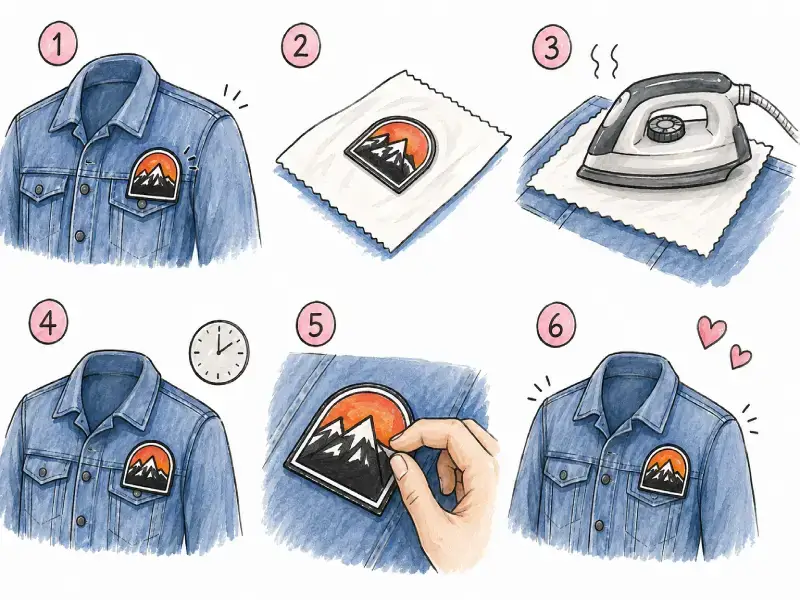
Would you like to personalize your jacket? First, preheat the area, stick your patch, put on a cotton cloth so that it doesn’t melt, and press. Remember to sew the edges for durability during the winter season.
Prepare Your Winter Jacket For Safe Patch Application
Winter jackets are expensive, practical, and at times very hard to personalize.
Heavy fabrics, padding, water repellency, artificial fibers, and insulation can all complicate patching as compared to when patching a normal cotton T-shirt.
Exposure to too much heat can ruin your jacket, while low heat might result in loose patching around the edges. In this case, it will be advisable for you to treat both the jacket and patch as one task.
A patch can be applied successfully on a winter jacket without any damage when the proper preparations and methods are utilized.
Choose A Patch Suitable For Winter Jackets
Not all patches are made for all jackets.
One should look at the backing of the patch and the care label of the jacket before attaching any patch to it. The iron-on glue requires adequate heat for activation; however, winter jackets have some components that should not be exposed to heat at all.
Water-repellent, nylon, coated fabric, leather, vinyl, and synthetic materials can be particularly sensitive. It is often recommended not to apply patches traditionally on such materials as nylon, leather, vinyl, etc.
For suitable jackets, custom iron on patches are an efficient method of adding logos, names, team logos, outdoor graphics, or even artwork. Where the jacket cannot withstand the required temperature, other options like sewing or hook-and-loop backing will be more appropriate.
Test Your Jacket Before Applying Heat
Testing is among the simplest ways of avoiding permanent damage.
The consumer needs to pick a concealed portion on the jacket, such as the seams of the inside portion, or where a flap covers up a section. The iron can now be tested using the lowest temperature appropriate for the fabric.
Some of the things you need to watch out for include:
- A bright appearance of the fibres
- Changes in colour
- Distortion of the surface
- Burning of the coating
- Wrinkling or shrinking of the fabric
The jacket also needs to be clean and dry. Dirt, moisture, and wrinkles can affect the process of adhesion. Testing will take only a few minutes compared to the much higher price of ruining a favorite winter jacket.
Prepare A Firm Surface For Better Pressure
A soft ironing board will not necessarily offer the best support in ironing thick winter clothing. A hard and heat-resistant surface will help in creating even pressure on the patch. It is necessary to position the jacket as evenly as possible.
If the jacket is padded, has pockets, zippers, or other elements under the application area, it is necessary to move the jacket to align the patch with an even surface.
Inconsistency in the surface may result in weak spots, as the iron cannot put even pressure on all parts of the patch. Even pressure starts with proper preparation.
Protect Your Premium Patch During Heat Application
Direct application of the hot iron to the design might affect the design.
That’s why many fashion-forward people go for custom embroidered patches Canada, which have been designed in such a way that the threads are more tightly woven and will not fray in extreme weather.
Using a press cloth will serve as an added protection layer between the iron and the patch. You can also use parchment paper or a Teflon sheet depending on your patch and method of application. The iron should be held still instead of being moved back and forth since sliding will result in the shifting of the patch before the glue dries.
Position Your Patch Before Turning On Heat
After the application of heat, movement will become increasingly difficult.
Patches need to be properly aligned before the iron’s application. Logos should have their position determined using either measurements from other seams in the area or according to the design lines present in the jacket itself.
In addition, it would be helpful to see how the patch aligns both while lying flat and while wearing the jacket. The position that seems perfectly centered while laid out on a table might look slightly tilted once the jacket is folded or worn.
Finally, for bigger designs, low-tack tape could help keep them in place during the ironing process.
Apply Heat According To Fabric Instructions
There is no standardized temperature and pressing time for all winter jackets.
Different patch manufacturers will have different guidelines, with some suggesting around 150°C, while others will suggest various temperatures or times depending on the nature of their adhesives. This is why it would be advisable to follow the manufacturer’s instructions for the patch rather than the instructions found online.
The procedure usually involves:
- Turn the steam off.
- Cover the patch.
- Use even and firm pressure.
- Hold the iron still for the recommended time.
- Inspect edges after cooling.
- If needed, repeat the procedure.
Usually, the use of steam is discouraged when applying the patch, as the adhesive is supposed to activate from dry heat. Never exceed the heat limit of your jacket.
Refresh Winter Jackets With Stylish Patch Designs
Iron-on patches can bring out one’s personality in winter jackets while still retaining a functional look and uniqueness.
The fashionable use of iron-on patches allows everyone to incorporate logos, artistic elements, symbols, and even the theme of the season into their wardrobe without having to change their whole outfit.
Through thoughtful choices of patches, one can either enhance neutral jackets, show off their individuality, or create matching sets of patches for teams or clubs.
Keep Patches Secure Through Harsh Winter Conditions
Winter coats could be subjected to more strain compared to casual shirts. They could be subjected to rain, snow, backpacking, bending, frequent cleaning, and daily outdoor activity.
Despite proper application of an adhesive patch, it may be strained due to difficult conditions. In cases where the garment is frequently used, it will be advisable to stitch the patch.
Such an approach could be beneficial in the following garments:
- Winter work coats
- Outdoor apparel
- Team coats
- School uniforms
- Sports outerwear
The combination of adhesive patch positioning and edge stitching can make it more secure where applicable.
Finish the Application With Proper Cooling
After ensuring that the edges are properly bonded, turn the jacket around and do the same heat treatment again for 20 seconds from the other side of the fabric.
In this manner, the glue bonds within the fibers will be maximized as much as possible in both directions; this way, you get maximum security for wearing your jackets outdoors in the winter season. After doing so, let your jacket hang for an hour.
Attach iron-on patches correctly by letting them cure for this long, as this will ensure that the bond is fully cured and prepared to take up the challenges of winter wear.
Common Questions About Patch Application Methods
Is every winter jacket suitable for using an iron-on patch?
No. Some of the winter jackets have nylon, leather, vinyl, waterproof layers, or other artificial fabrics that are not iron-resistant. It is necessary to check the care instructions both for the jacket itself and the patch manufacturer. Sewing and the use of hook-and-loop patches are preferable when heat treatment is not recommended.
Does steam have to be used while ironing patches?
No. Most of the patch manufacturers advise against using the steam function since it is assumed that the adhesive reacts to heat only. It is also required to cover the patch surface with the pressing cloth and apply the appropriate heat and pressure.
Is it possible to iron patches onto a padded jacket?
No. Thick insulation makes it hard to apply the pressure needed for the patch to bond evenly. It is better to find a flat surface of the jacket without a thick layer of insulation. If that is not possible, sewing can be considered as an alternative method of attachment.
How can the iron-on patch be kept stable in winter?
Apply it properly using a suitable patch and backing, allowing enough time for cooling and curing. In addition, for jackets that experience lots of movement and cleaning, you may need to stitch them as well to make sure they remain stable for a long period of time.
Is sewing superior to ironing for winter jackets?
Sometimes, when the jacket is thick and heavily insulated, sewing may provide more stability than adhesive alone. It is common for many people to use both methods: to iron for temporary attachment and sew for permanent stability through the whole winter.
Conclusion
Applying a patch on a winter jacket is an easy and effective technique to reflect your personality.
To develop a professional appearance and have something long-lasting, it is essential to evaluate the heat resistance of your material along with spending appropriate time curing the adhesive.
Whether you are going for one emblem or developing an entire aesthetic design on it, the only important thing is patience and precision.
Allow sufficient time in both the heating and cooling process, and observe how the custom-made jacket that you design is sure to be a reliable companion throughout every season.

I’m the creative voice behind the blog at Embroidered Patches Canada, where I turn custom patch design into clear, practical insights for brands, teams, and creators. I provide tips on how to design embroidered patches that not only look spectacular but also have a lasting impact, covering everything from materials and stitch styles to advertising strategies and patch trends. I help companies, organisations, and individuals transform their ideas into elite custom patches that tell a story by providing in-depth instructions, trend updates, and professional advice.