
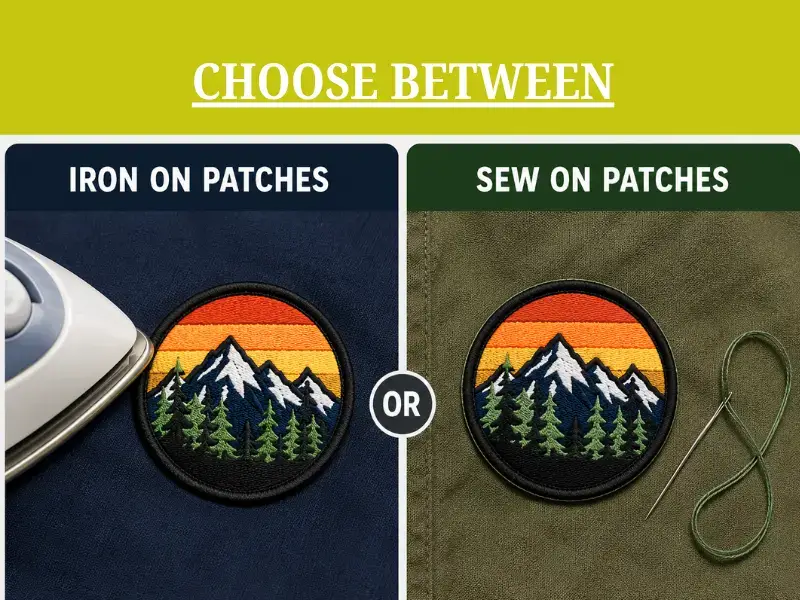
How to Choose Between Iron-On vs. Sew-On Patches
Uncertain about the attachment style to suit your hectic schedule? Iron-on patches provide hassle-free installation in minutes with household tools; however, sew-on patches are definitely the superior choice when it comes to creating tough, long-lasting fabric attachments.
Start With The Right Patch For Your Project
Custom patches are a great means to decorate garments, advertise a company, commemorate achievements, and fix ruined clothes.
Patches can be used on jackets, uniforms, backpacks, and even hats; they are a means to establish a character and purpose. One key question that the buyer is uncertain about is whether to go for iron-on patches or sew-on patches.
Both of these options can be very effective, but they are intended to address various needs. Type of fabric, durability, convenience, and use all have an impact on the best selection.
Knowing which option has the pros and cons will help you ensure that your patches are not only looking professional but also ready to last for years.
Select The Best Patch For Your Purpose
It is essential to be aware of how you will be using the patch before choosing which type to install. There are varying project needs for durability and flexibility.
Iron-on patches could be great for a special event, casual wear, or decoration.
But with workwear, uniforms, and often washed clothing, sew-on patches can be very helpful.
When you think about how the patch will be used and how often you plan to wear the garment, you can make a decision that makes it look great while providing long-term performance.
Save Time With Simple-To-Use Iron-On Patches
Iron-on patches are intended to be easily put on and taken off. Their heat-activated adhesive allows users to attach patches without sewing, making them an excellent choice for beginners or anyone looking for a simple solution.
Iron-on patches provide a neat and professional appearance when applied properly at the appropriate temperature and pressure.
These are particularly good for cotton, denim, and other fabrics that can withstand some heat.
Iron-on patches are an effective method to personalize a garment without the need for special sewing skills, which includes decorating clothes, school uniforms, and casual accessories.
Add Maximum Durability With Sew-On Patches
When durability is the most important consideration, sew-on patches are the best option. Stitched patches use only thread to permanently attach them to the garment without any adhesive.
They are ideal for heavyweight garments, uniforms, sport jerseys, motorcycle jackets, and exterior items that are subjected to frequent movement and washing.
While it may take longer and be harder, sewing can be a worthwhile process for products that will be used in challenging environments.
Consider Long-Term Maintenance Before Deciding
Patches should remain beautiful after they’re attached. They can degrade over time because of regular washing, exposure to sunlight, and everyday use.
Common iron-on patch maintenance tips that can make your iron-on patches last longer include washing clothes inside out, avoiding over-drying, and letting the adhesive dry completely after it is applied.
These little things help to maintain the embroidery and the relationship between the patch and the fabric.
Before you buy, think about maintenance to get a patch that fits you.
Pair The Patch To Your Fabric Type
Not all fabrics are suitable for heating or stitching. Knowing the material you’re working with helps avoid damage and prolong the lifespan of the patch.
In general, patches do not work well with synthetic fabrics, but natural fabrics like cotton and denim are compatible with iron-on patches.
Delicate fabrics, waterproof materials, and some synthetic fabrics may not respond to heat and are more appropriate for sewn applications.
The selection of the correct method of attaching the patch to the fabric helps to maintain the garment and preserve the patch.
Keep A Balance Between Convenience And Long-Term Value
The decision of whether to sew-on or iron-on a patch is not just a matter of convenience.
Instead, it’s about durability, maintenance, and use.
Iron-on patches are convenient for time-saving applications and also work well for quick personalization projects. Sew-on patches take more time to put on, but can offer better durability in challenging conditions.
Recognizing these differences enables buyers to choose the solution that is most suitable for their needs while maintaining quality.
Choose A High-Quality Embroidery Patch For Optimal Results
The quality of the embroidery is as important as the method of attaching it.
Stitching, colorful threads, and sturdy backing materials all enhance the overall look.
When choosing embroidered patches Toronto, customers often focus on the neatness of the embroidery, consistency of color, and the durability of the materials, which will retain their appearance over time.
When shopping for patches, consider buying good-quality ones to keep your design crisp and professional and minimize the chance of fraying or fading with time.
Use Sew-On Patches For Heavy-Duty Applications
There are occasions when a garment is subjected to situations where more durability is needed than adhesive can offer.
Jackets for Motorcycles, Scout uniforms, workwear, or sports kits are washed often and move continuously.
In these cases, sew-on patches are more reliable as they attach firmly to the fabric by the thread. They do not lift around the edges like other stitches and work better on thicker fabrics like canvas, leather, and heavy denim.
Although sewing takes longer, the added strength makes sew-on patches a worthwhile investment for long-term use.
Understand The Cost Difference Before Ordering
The other deciding factor for choosing the iron-on patch vs the sew-on patch is the cost.
Both are available in a variety of price options, but the attachment technique isn’t the only factor that determines the costs; the complexity of the design and the patch size and order quantity are also significant factors.
The use of iron-on patches could lower application expense by eliminating the need to sew them on. However, sewn-on patches can take a bit more time or expertise, especially for larger quantities.
When comparing both production and application costs, buyers can determine which is the best fit for their budget.
Design Personalized Styles That Reflect Your Identity
Custom patches are a great way to express a brand, a person, or a group’s personality, accomplishments, or brand in an inventive way. Personalized designs are used to make an impact in clubs, schools, businesses, and sports teams.
Numerous customers who order personalized sew on patches Canada seek out unique shapes, custom shades, and elaborate embroidery that represent their identity.
By opting for a professional manufacturer, each patch is made with precision, ensuring a design that remains appealing even after frequent use and washing.
Avoid Regular Mistakes When Applying Patches
High-quality patches can still be ineffective if they are not installed properly. Knowing a few common pitfalls can help enhance both the look and longevity.
To prevent mistakes, the following should be avoided:
- Using an iron-on patch on wet or soiled clothing
- Applying too much heat to the garment
- Not pressing for the recommended amount of time
- Sewing too close to the embroidered edge
- Immediately washing the garment after use
- Not reading the care label before applying a patch
A bit more attention to detail during application can result in a professional and long-lasting appearance.
Care For Your Patches To Keep Them Looking New
No matter which method you use to attach your patches, the care you put in plays an important part in the longevity of your patches.
If possible, wash clothes inside out and use mild detergents that will not damage the embroidered thread colors.
Do not use strong bleaching agents or high drying temperatures, as this can cause the adhesives or stitching to deteriorate with time. Where possible, let garments dry out in the air to keep both the fabric and the embroidery in good condition.
Easy patch maintenance keeps them looking bright, durable, and beautiful for years.
Think Beyond Appearance When Buying Custom Accessories
Numerous companies purchase patches with other company apparel, like lanyards, name badges, and promotional products.
Planning these products together helps to ensure that there is a uniform image throughout uniforms and events.
Understanding things to know before buying lanyards can enable businesses to coordinate colours, logos, and materials to ensure that patches and accessories all work together professionally.
This attention to detail further reinforces brand recognition and adds a professional look to the end product.
Purchase The Right Patch With Confidence
The decision to use iron-on or sew-on patches depends on the situation. Iron-on patches are great for fashion, casual wear, and decorative projects when convenience and quick application are the top considerations.
For maximum durability in uniforms, outdoor clothes, or clothes washed often, use sew-on patches for longer-lasting performance.
By knowing the pros and cons of each choice, you can make the most informed decision and ensure that your patches will remain professional-looking.
Useful Answers Before Purchasing Your Next Patch
Which type of patch is going to last longer?
Sew-on patches will typically last longer, as the sewing keeps them intact despite regular washing, extensive use, and normal wear.
Can all textiles be ironed on?
No, iron-on patches are best used on heat-resistant fabrics such as cotton and denim, but may not be appropriate for delicate or waterproof fabrics.
Are patches with iron-on adhesive sewn later?
Yes. Many people use iron-on patches and then sew all around the edges for additional security and durability.
What type of patch is worn on uniforms?
Uniforms should often use sew-on patches that stay in place even with many washings, movement, and challenging working conditions.
How do I maintain my patches to keep them looking new?
Wash garments gently, don’t use too much heat, follow the care instructions, and store garments appropriately to preserve patch colour, stitching, and durability.
Conclusion
Iron-on patches and sew-on patches each have their own pros and cons, with neither being universally superior to the other. Select the right choice depending on your garment, use, maintenance requirements, and level of durability you seek.
With some basic understanding of each type of attachment method, as well as choosing high-quality embroidery and knowing how to apply and care for it, you can create patches to improve your wardrobe and keep them looking good for years. Spending time on the right selection at the start will ensure that it looks right and is functional in every environment.

I’m the creative voice behind the blog at Embroidered Patches Canada, where I turn custom patch design into clear, practical insights for brands, teams, and creators. I provide tips on how to design embroidered patches that not only look spectacular but also have a lasting impact, covering everything from materials and stitch styles to advertising strategies and patch trends. I help companies, organisations, and individuals transform their ideas into elite custom patches that tell a story by providing in-depth instructions, trend updates, and professional advice.